Franco-Dutch Economic Barometer 2026: Dutch Businesses Reaffirm Long-Term Commitment to France
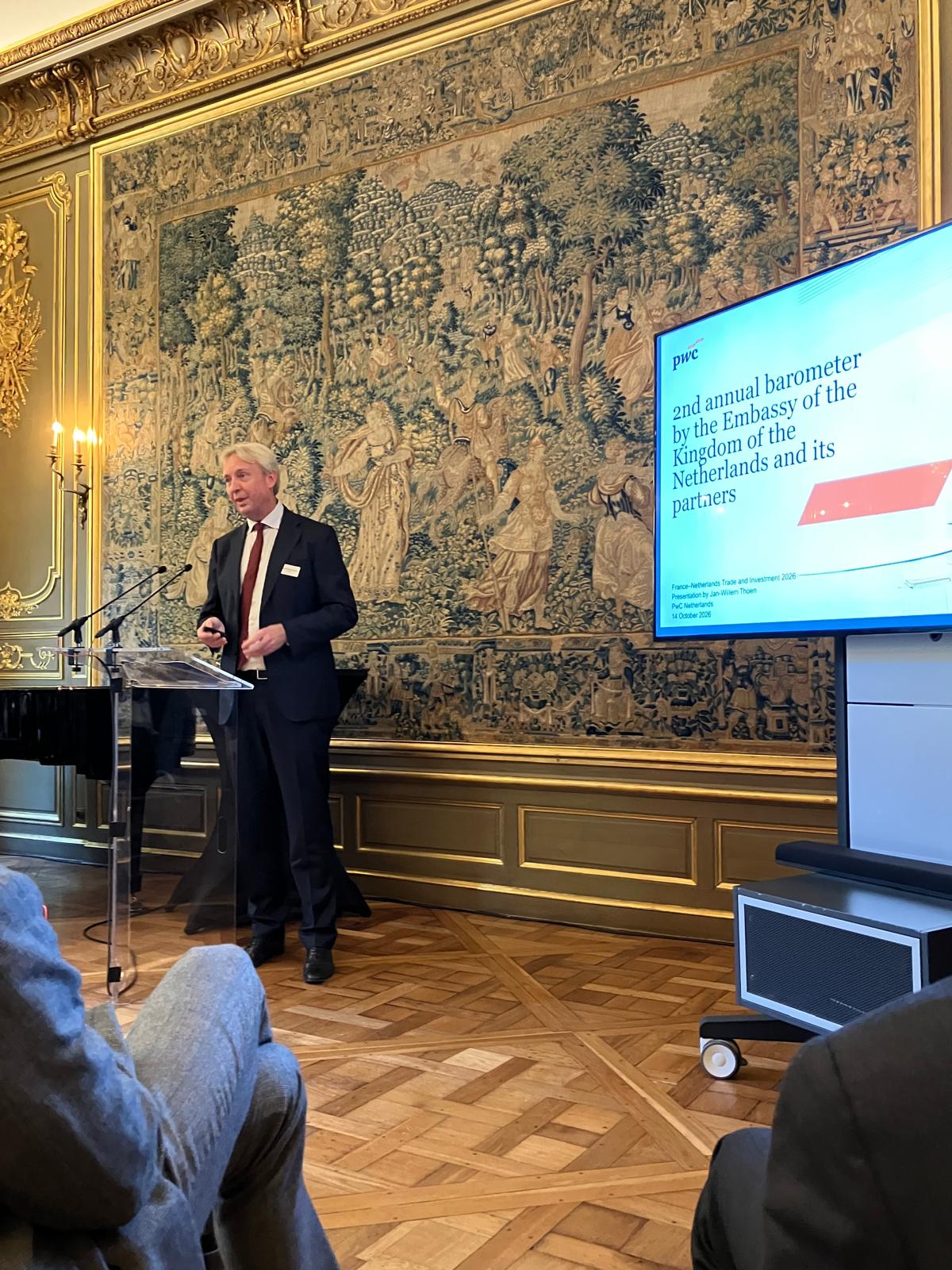
The Netherlands France Chamber of Commerce (NFCC), in partnership with the Embassy of the Kingdom of the Netherlands in France, PwC Netherlands, and ING, has unveiled the results of the 2026 France-Netherlands Trade and Investment Barometer
The key finding is clear: Despite persistent macroeconomic headwinds and political uncertainty, Dutch businesses continue to see sustained strategic opportunities in France
Key Takeaways at a Glance
Bilateral Trade Resides at Scale: Total trade between the Netherlands and France remained steady at €117 billion in 2025
Services Leading Growth: Dutch exports of services to France grew 7.4% year-on-year to €19.4 billion
Overall Sentiment Remains Positive: The 2026 Barometer company index stands at 3.2 out of 5.0, indicating a positive business sentiment and steady confidence in France’s structural foundations
Strong Expansion Intentions: 68% of surveyed Dutch companies plan to expand their workforce and presence in France over the next 2–3 years, while only 11% anticipate a contraction
Strategic Investments & Next-Gen Tech: In 2025, Dutch companies announced 113 investment projects in France (accounting for 6% of all foreign investment projects)
What Makes France Attractive to Dutch Entrepreneurs?
Dutch executives consistently highlight France’s structural strengths when weighing long-term commitments:
Strategic Location & Gateway (4.0/5.0):
France's geography provides critical connectivity across Western and Southern Europe
Quality of Life & Talent Attraction (3.8/5.0):
Rated as a major asset for attracting and retaining high-caliber international teams
Infrastructure & Regional Appeal (3.5/5.0):
Beyond the primary corporate hub of Île-de-France, Dutch companies are actively scaling operations across Auvergne-Rhône-Alpes, Grand Est, Nouvelle-Aquitaine, and Provence-Alpes-Côte d'Azur
The Ecological Transition Agenda (3.4/5.0):
France’s decarbonized power grid and active circular economy framework create tangible commercial opportunities in energy transition and sustainable industry
Areas for Improvement: Respondents continue to emphasize that administrative complexity (2.0/5.0), the corporate tax framework (2.0/5.0), and labor costs (2.4/5.0) remain the main structural hurdles requiring continuous dialogue and reform
Looking Ahead to 2027
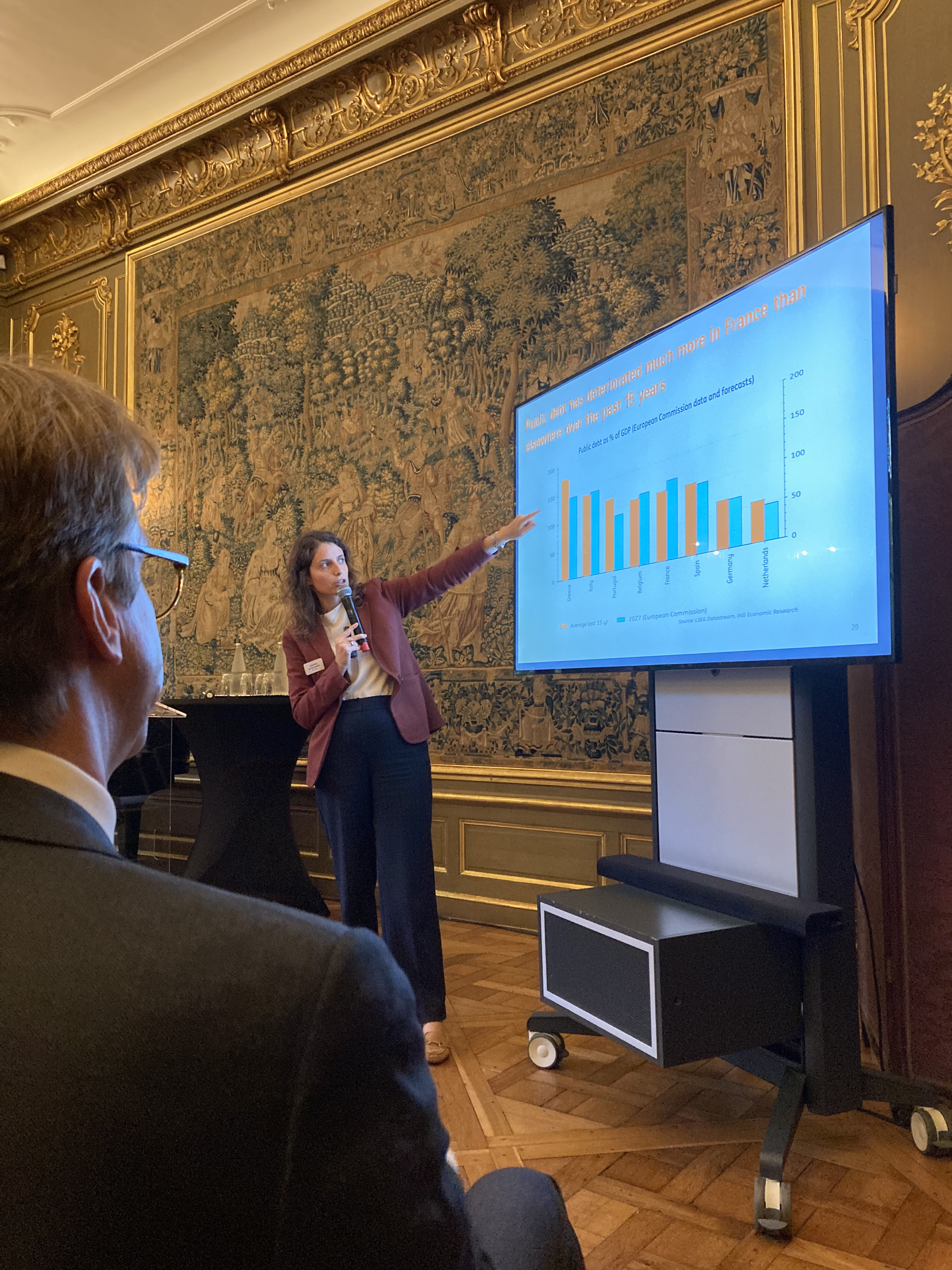
Economic forecasts prepared by ING highlight that while economic growth across Europe remains modest, the Franco-Dutch relationship is grounded in complementary advantages: Dutch leadership in technology-led supply chains and digital infrastructure matches France’s scale, industrial depth, and energy transition assets
As the Netherlands France Chamber of Commerce, we remain dedicated to supporting businesses navigating cross-border expansion, building local partnerships, and unlocking the full potential of Franco-Dutch collaboration.